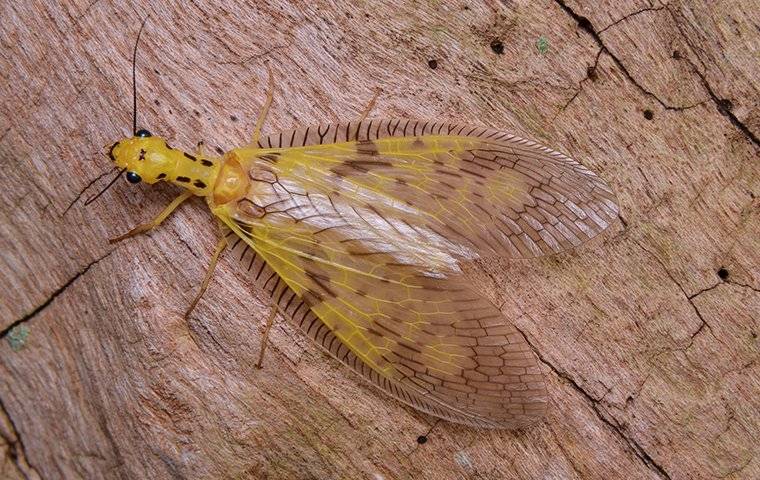
The eastern dobsonfly, Corydalus cornutus (Linnaeus), is one of our biggest non-lepidopteran creepy crawlies. Its hatchlings, known as hellgrammites, are the top invertebrate predators in rough streams where they happen. Grown-up male dobsonflies are especially stupendous in light of their substantial sickle-molded mandibles (jaws).
There is a sum of thirty types of Corydalus (Contreras-Ramos 1997), generally from South America. Notwithstanding the eastern dobsonfly, Corydalus cornutus, there are three dobsonflies of the variety Corydalus in the western U.S.
For straightforwardness, the expression “dobsonfly” all through the rest of this production will allude toward the eastern dobsonfly, Corydalus cornutus.
The Dobsonfly can be as large as 3 inches and is light brown in shading. Dobsonflies are critical amphibian creepy crawlies that live in quick-moving streams.
The grown-ups are one of the biggest bugs in the U.S., and the males have huge mandibles up to 1-inch or more long.
Grown-ups are pulled into open-air lights on structures close conduits in this manner provoking interest and worry by mortgage holders finding at least one dobsonflies on the patio or deck. Dobsonflies, nonetheless, are not hazardous and don’t bite.
Life Cycle
Eggs
Dobsonfly eggs are dim, round and hollow and somewhat less than 1.5 mm long and 0.5 mm in width. They are laid in bunches (around 2 cm in distance across) with a normal of roughly 1,000 eggs/group (Baker and Neunzig 1968, Mangan 1992.). The eggs are masterminded in three layers, and the egg mass is secured with a reasonable liquid by a brushing movement of the tip of the female’s stomach area. The reasonable liquid dries to a white shading. Externally, the egg masses take after substantial winged animal droppings.
Hatchling
Dobsonfly hatchlings (75 to 90 mm long) are light darker and obscured by a covering of dim dark colored microspines (Neunzig and Baker 1991). The thoracic sections are secured with solidified, dark tergites (dorsal plates). Stomach portions 1 through 8 have sidelong material fibers which capacity to shield them from each other and from other little predators (Neunzig and Baker 1991), and fragments 1 through 7 each has a couple of ventro-horizontal tufts of tracheal gills that ingest broke up oxygen (Barclay et al. 2005, Hoover et al. 1988). Notwithstanding the tracheal gills, hatchlings have spiracles enabling them to inhale both all through the water. There are two prolegs at the tip of the mid-region – each with a dorsal fiber and a couple of terminal snares to assist the hatchlings stay themselves to the substrate. The mandibles are effective and intensely sclerotized.
Pupae
Dobsonfly pupae are exarate (the creating wings, legs, receiving wires and mouthparts are connected just at their proximal finishes) and yellow-orange in shading with darker splotches on the dorsum of the midriff. They are secured with moment setae. Male pupae have a little tubercle on the sternum of the prothorax and have somewhat bigger mandibles and more extensive head containers than females, (Mangan 1994), however, the mandibles of the genders are not especially dimorphic as in the grown-ups. Parfin (1952) detailed that the long mandibles of the male are collapsed up like an accordion in the pupal exoskeleton.
Habitat
The hatchlings, additionally called hellgrammites, live under stones at the base of streams. They are prized as fish food, particularly among fly fishers.
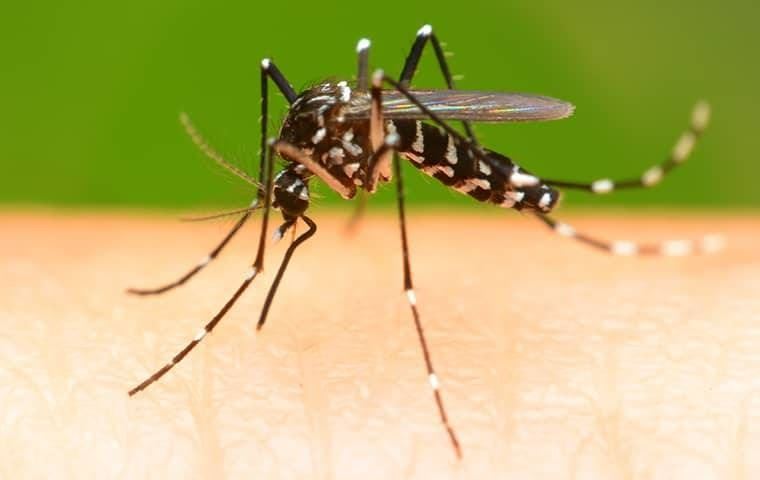
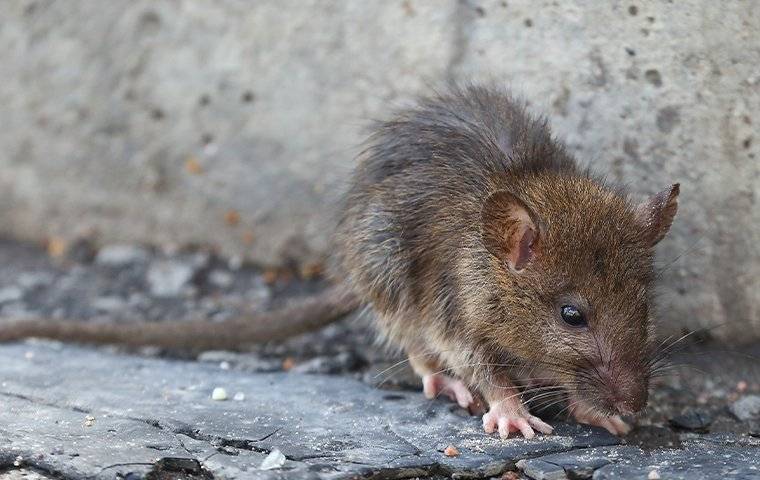
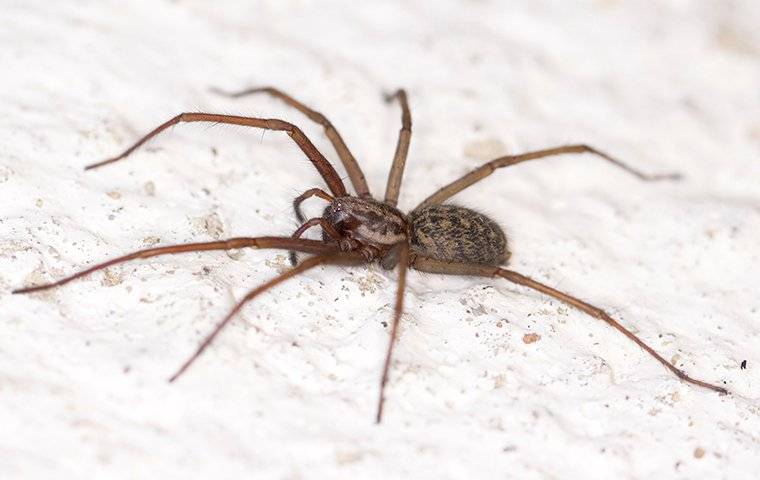
Find out more about the pests in your area, including how to identify them, how to exterminate them, and some helpful prevention tips for each pest. The most common pests found in our area include ants, mosquitoes, termites, rodents, cockroaches, bed bugs, and spiders.
No control measures are vital when a dobsonfly is found outside a home or other building. It is basically a wayward creepy-crawly pulled into the lights.
You can move it to a nearby bush in the shade where it will probably continue its adventure as soon as it becomes dark.
Very kind and helped resolve a billing issue for us right away!
“He did the job quickly and I’m looking forward to seeing the results!”
- Asher W.
He took the time to talk to me about the products and how they are used.
“We appreciate him and go-forth and will definitely recommend services.”
- Crystal B.
Lovely interaction with the booking agent as well!
“He was professional, kind and we have every confidence he will take great care to protect our farm.”
- Nikki H.
He was courteous, friendly, and efficient at his job.
“The overall visit was great and I would recommend Go-Forth Pest to others.”
- Susan C.
The subscription is definitely affordable and well worth it!!
“Any further issue or findings he had, he was forthcoming with any helpful information.”
- Brittney Y.
Garrett was professional and helpful.
“He spent time educating us about "pests" and provided information regarding services with GoForth.”
- Joyce C.
This was my first experience with this co. They were very easy to get along with.
“Texted me before coming. Worked with me playing musical rooms with my dogs. I'll see how things are.”
- Constance E.
I'm very grateful that I found this company today!
“Amazing response time, reasonable prices, great customer service. Tevin was thorough and confident in his plan to fix our horrendous fire ant problem. We have had negative experiences with prior exterminators and probably waited way too long to call Go-For”
- Ashley T.
Great service with excellent solutions for any of our needs.
“We have been customers for almost 7 years for a reason. Our technician is the best. He always knows exactly how to address whatever pest has decided to bother us. We have referred them to many of our neighbors. Well worth the cost not to have to worry abou”